
Laboratorium piękna, etyki i sztuki. A laboratory of beauty, ethics and art.
Katowice · Venice

WideoVideo
Manifest założycielski The founding manifesto
Obejrzyj na YouTubeWatch on YouTubeO nasAbout us
Teatr — w rozumieniu Petera Brooka — jest przestrzenią, w której ujawnia się tajemnica człowieczeństwa. W epoce algorytmów ta definicja staje się naszym kompasem.
Theatre — as Peter Brook understood it — is the space in which the mystery of being human reveals itself. In the age of algorithms, that definition becomes our compass.
Paradoks naszych czasów polega na tym, że AI potrzebuje teatru. Samo słowo prompt znaczy „podpowiedź suflera” — teatr jest wpisany w język maszyn. Sztuczna inteligencja działa pełniej, gdy przypisze się jej rolę, gdy wprowadzi się ją na scenę, gdzie obowiązuje rytm, etyka i estetyka obecności.
The paradox of our time is that AI needs theatre. The word prompt itself means the prompter’s whisper — theatre is written into the language of machines. Artificial intelligence works more fully when it is given a role, when it is brought onto a stage governed by rhythm, ethics and an aesthetics of presence.
Human Presence Lab jako laboratorium rozwija projekty tam, gdzie teatr może być pomocny dla AI — gdzie sztuka uczy technologię ludzkiej wrażliwości, rytmu, symbolu i relacji. Jednocześnie dbamy o teatr jako miejsce żywego spotkania człowieka z człowiekiem, przestrzeń, której żadna maszyna nie zastąpi.
Human Presence Lab is a laboratory: we develop projects where theatre can be of use to AI — where art teaches technology human sensitivity, rhythm, symbol and relation. At the same time we care for theatre as a place of living encounter between one human being and another, a space no machine will replace.
Chcemy syntezy sztuk, o której marzył Wyspiański — teatr jako lustro, które „pokazuje cnocie własne jej rysy, złości jej własne podobieństwo”. To fundament: teatr jako lustro prawdziwego oblicza i piękna.
We want the synthesis of the arts that Wyspiański dreamed of — theatre as a mirror held up “to show virtue her own feature, scorn her own image”. That is the foundation: theatre as a mirror of the true face and of beauty.
Rozwijamy cyfrową scenę Il Teatro Immenso — przestrzeń, w której kontynuujemy polską tradycję Teatru Ogromnego i monumentalnego myślenia Wyspiańskiego. AI włączamy w tę syntezę, świadomi jej potencjału i odpowiedzialności.
We are building the digital stage Il Teatro Immenso — a space continuing the Polish tradition of the Immense Theatre and Wyspiański’s monumental thinking. We bring AI into that synthesis, aware of both its potential and its responsibility.
Inspiruje nas encyklika Leona XIV — wezwanie do troski o godność, piękno i wspólnotę. Wierzymy, że sztuka może być narzędziem równości, walki z wykluczeniem i odzyskiwania ludzkiej wrażliwości.
We are inspired by the encyclical of Leo XIV — a call to care for dignity, beauty and community. We believe art can be an instrument of equality, of resistance to exclusion, and of the recovery of human sensitivity.
Pracujemy z glitchem — błędem, który demaskuje algorytm i pokazuje, gdzie człowiek jest niezastąpiony.
We work with the glitch — the error that unmasks the algorithm and shows where the human being is irreplaceable.
W pęknięciu rodzi się sens. W błędzie — światło. In the crack, meaning is born. In the error — light.

Teatr. Scena cyfrowa założona na wyspie Murano koło Wenecji. A theatre. A digital stage founded on the island of Murano, near Venice.
WideoVideo
Manifest Il Teatro Immenso The Il Teatro Immenso manifesto
Obejrzyj na YouTubeWatch on YouTubeMurano · Venezia
Teatr założony na wyspie Murano koło Wenecji — scena cyfrowa, nie budynek. A theatre founded on the island of Murano, near Venice — a digital stage, not a building.
ScenaThe stage
Il Teatro Immenso to cyfrowa scena Fundacji Human Presence Lab. Kontynuujemy na niej polską tradycję Teatru Ogromnego i monumentalnego myślenia Wyspiańskiego — w linii prowadzącej od Wyspiańskiego do Grotowskiego. AI włączamy w tę syntezę, świadomi jej potencjału i odpowiedzialności.
Il Teatro Immenso is the digital stage of the Human Presence Lab Foundation. On it we continue the Polish tradition of the Immense Theatre and Wyspiański’s monumental thinking — in the line that runs from Wyspiański to Grotowski. We bring AI into that synthesis, aware of both its potential and its responsibility.
Scena nie ma budynku. Ma wyspę, kanał i widza, który ogląda ją z dowolnego miejsca na świecie — a w środku zawsze żywego człowieka.
The stage has no building. It has an island, a canal, and a viewer who watches from anywhere in the world — and at its centre, always, a living human being.
@IlTeatroImmenso
Wszystkie materiały sceny publikujemy na YouTube. Subskrybuj, żeby nie przegapić premier. Everything the stage makes is published on YouTube. Subscribe so you don’t miss a premiere.
Uwagi nie da się zarządzić aplikacją — trzeba ją wyćwiczyć. Attention cannot be managed with an app — it has to be trained.
Problem, który rozwiązujemyThe problem we solve
Pracownik umysłowy przerywa zadanie kilkadziesiąt razy dziennie — powiadomienie, wiadomość, „szybkie pytanie”. Po każdym przerwaniu powrót do pełnej koncentracji trwa kilkanaście minut, więc realny czas pracy głębokiej kurczy się do pojedynczych godzin w tygodniu. Na spotkaniach obecni są ludzie, których uwaga jest gdzie indziej: decyzje zapadają bez udziału połowy sali i wracają dwa tygodnie później jako nieporozumienie.
A knowledge worker breaks off a task dozens of times a day — a notification, a message, a “quick question”. Each interruption costs well over ten minutes before full concentration returns, so real deep-work time shrinks to a few hours a week. Meetings fill with people whose attention is elsewhere: decisions are taken without half the room and come back two weeks later as a misunderstanding.
Narzędzia AI dołożyły do tego warstwę, której nie było dwa lata temu. Praca z asystentem to nieustanne przełączanie między własnym tokiem myślenia a dialogiem z modelem — a każde przełączenie kosztuje. Odpowiedź modelu brzmi kompetentnie, więc czyta się ją pobieżnie i przyjmuje bez sprawdzenia; im bardziej rozproszony czytelnik, tym mniej krytyczny. Dochodzi do tego oddawanie modelowi samego trzymania problemu w głowie — wygodne, dopóki zespół nie straci zdolności przemyślenia czegokolwiek dłuższego bez podpowiedzi. To nie jest problem narzędzia. To problem uwagi, którą trzeba do narzędzia przynieść.
AI tools have added a layer that did not exist two years ago. Working with an assistant means constantly switching between your own line of thought and a dialogue with the model — and every switch has a price. The model’s answer sounds competent, so it gets skimmed and accepted unchecked; the more distracted the reader, the less critical. On top of that comes handing the model the very act of holding a problem in mind — convenient, until the team can no longer think anything through at length without prompting. This is not a tool problem. It is a problem of the attention you bring to the tool.
Szkolenia z produktywności odpowiadają na to kolejnym narzędziem, czyli kolejnym ekranem. My nie dokładamy narzędzia — trenujemy zdolność kierowania uwagą, jak trenuje się mięsień.
Productivity training answers this with one more tool, which means one more screen. We add no tool. We train the capacity to direct attention itself, the way a muscle is trained.
MetodaThe method
Program Stage Presence Method opiera się na systemie Stanisławskiego i tradycji wachtangowskiej. Aktorstwo jest jedynym zawodem, w którym uwaga jest przedmiotem systematycznego treningu od ponad stu lat — aktor musi utrzymać skupienie przez trzy godziny, na oczach widowni, przy pełnym obciążeniu stresem. Aparat jest przenoszalny na pracę biurową bez żadnej mistyki.
The Stage Presence Method programme is built on the Stanislavski system and the Vakhtangov tradition. Acting is the only profession in which attention has been the object of systematic training for over a hundred years — an actor must hold focus for three hours, in front of an audience, under full stress. That apparatus transfers to office work with no mysticism attached.
Pracujemy na pojęciach operacyjnych, nie na motywacji: przedmiot uwagi (na czym dokładnie jest skupienie w danej sekundzie), kręgi uwagi (mały — ja i zadanie; średni — ja i rozmówca; duży — ja i cała sala; świadome przechodzenie między nimi), przerzut uwagi (kontrolowana zmiana obiektu zamiast szarpnięcia bodźcem), publiczna samotność (praca w pełnym skupieniu przy ludziach i hałasie), zacisk (napięcie ciała, które zjada uwagę, zanim zrobi to telefon).
We work with operational concepts, not motivation: the object of attention (what exactly focus rests on in a given second), the circles of attention (small — me and the task; medium — me and my counterpart; large — me and the whole room; and deliberate movement between them), the shift of attention (a controlled change of object instead of being yanked by a stimulus), public solitude (full concentration in the presence of people and noise), and tension (the physical clamp that eats attention before the phone gets a chance to).
ProwadzącyYour trainer
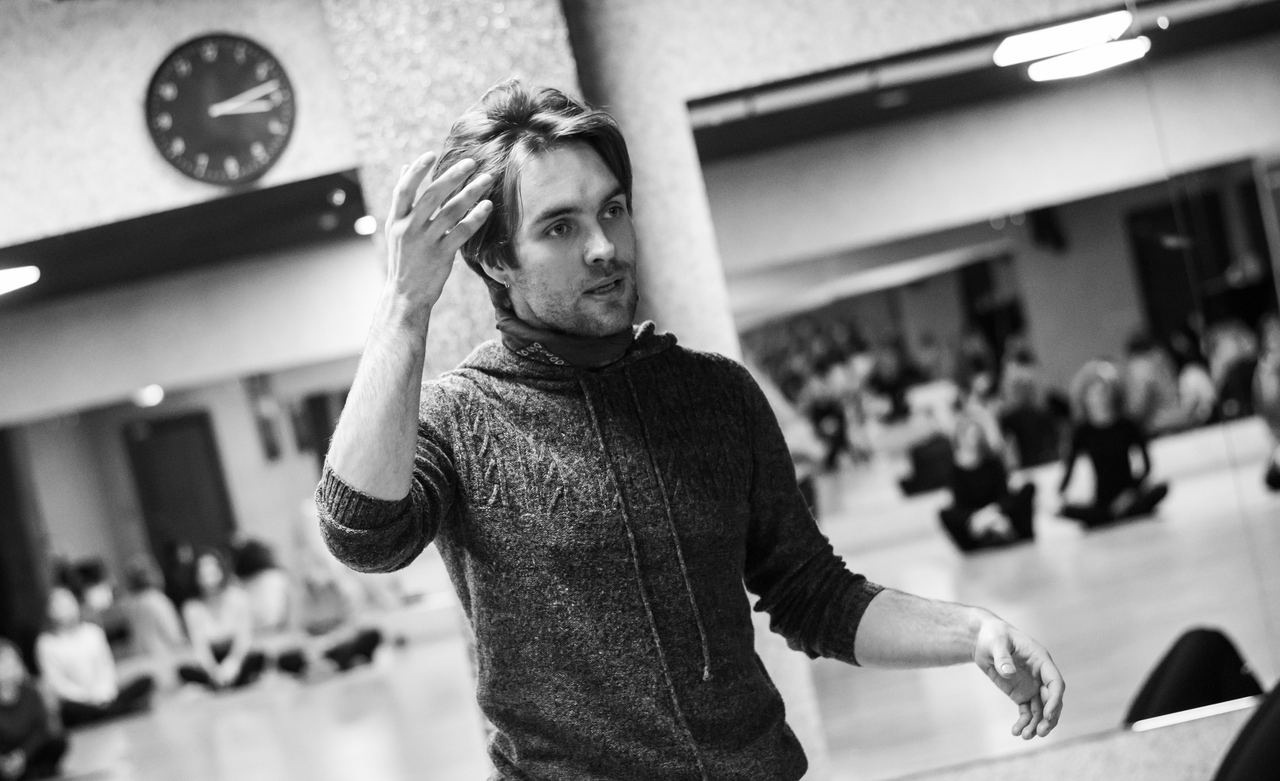
Bartłomiej Malik
Aktor, absolwent Instytutu Teatralnego im. Borysa Szczukina (kurs Anny Dubrowskiej, 2020–2025) oraz krakowskiej szkoły aktorskiej Lart studiO. Stypendysta „Młodej Polski” Ministra Kultury i Dziedzictwa Narodowego w dziedzinie teatru (2021). Na ekranie m.in. jako Adept I w Całopaleniu Krzysztofa Zanussiego.
Actor, graduate of the Boris Shchukin Theatre Institute (course of Anna Dubrovskaya, 2020–2025) and of the Lart studiO acting school in Kraków. Holder of the “Młoda Polska” scholarship of the Polish Ministry of Culture and National Heritage in the theatre category (2021). On screen as Adept I in Krzysztof Zanussi’s Całopalenie.
Prowadzenia warsztatów uczył się w relacji mistrz–uczeń: asystował Iwanowi Nikulczy, aktorowi Teatru Romana Wiktiuka, przy jego autorskim treningu „Być”, oraz Marii Kazniaczajewej, pedagog Instytutu Szczukina. Na tej podstawie stworzył Stage Presence Method — trening uwagi i obecności dla osób spoza zawodu aktorskiego.
He learned to lead workshops as an apprentice: he assisted Ivan Nikulcza, an actor of the Roman Viktiuk Theatre, on his authorial training “Być”, and Maria Kaznacheyeva, a pedagogue of the Shchukin Institute. On that foundation he created Stage Presence Method — attention and presence training for people outside the acting profession.
Głos: cztery lata pracy z Edytą Glińską w warszawskim Studiu Głosu „Czułość” (2019–2023), następnie technika śpiewu i emisji metodą Flow Phonation z Magdą Sekułą (2024–2025).
Voice: four years with Edyta Glińska at the “Czułość” voice studio in Warsaw (2019–2023), then singing technique and voice work using the Flow Phonation method with Magda Sekuła (2024–2025).
Trener kompetencji cyfrowych w programie KPO — 78 szkoleń i 464 godziny zajęć z AI i cyfryzacji w urzędach. Ukończył specjalizację „AI Foundations for Business Professionals” (Saïd Business School, University of Oxford). Założyciel i prezes Fundacji Human Presence Lab. Warsztaty prowadzi po polsku, angielsku i rosyjsku.
Digital-competence trainer under Poland’s national KPO programme — 78 courses and 464 classroom hours on AI and digitalisation delivered in public administration offices. Completed the “AI Foundations for Business Professionals” specialisation (Saïd Business School, University of Oxford). Founder and chairman of the Human Presence Lab Foundation. Workshops are delivered in Polish, English and Russian.
RealizacjeDelivered
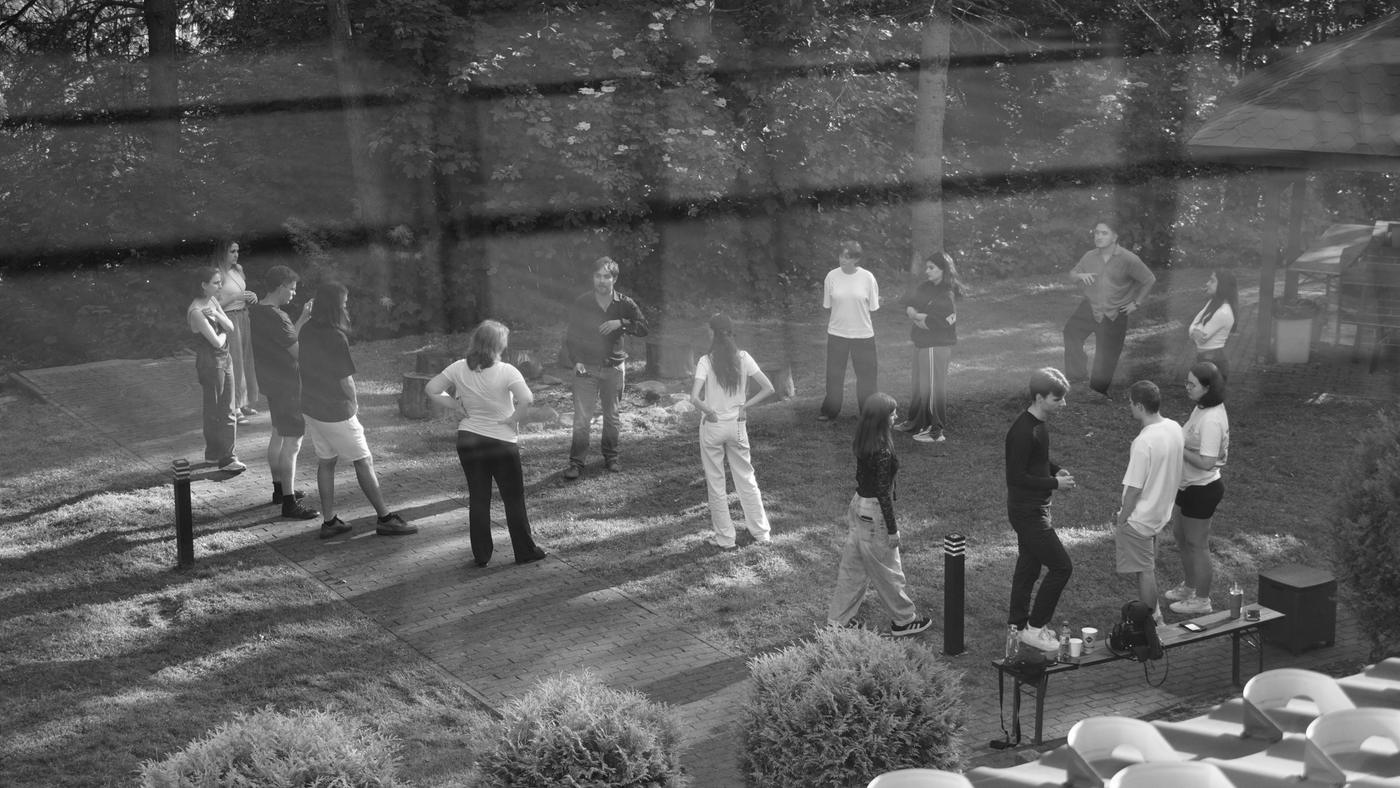
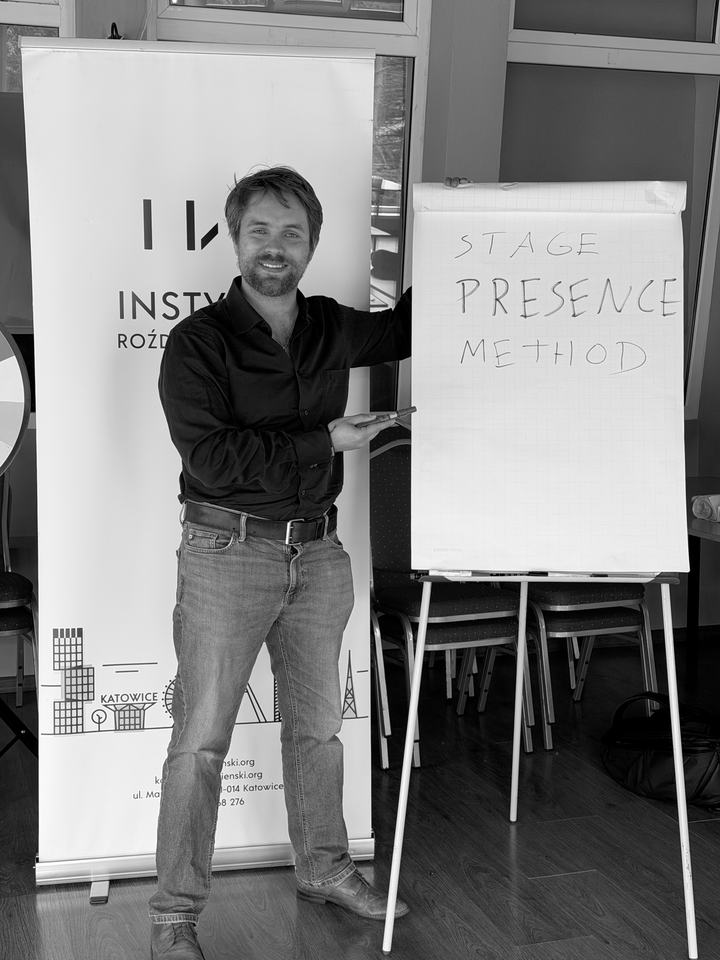
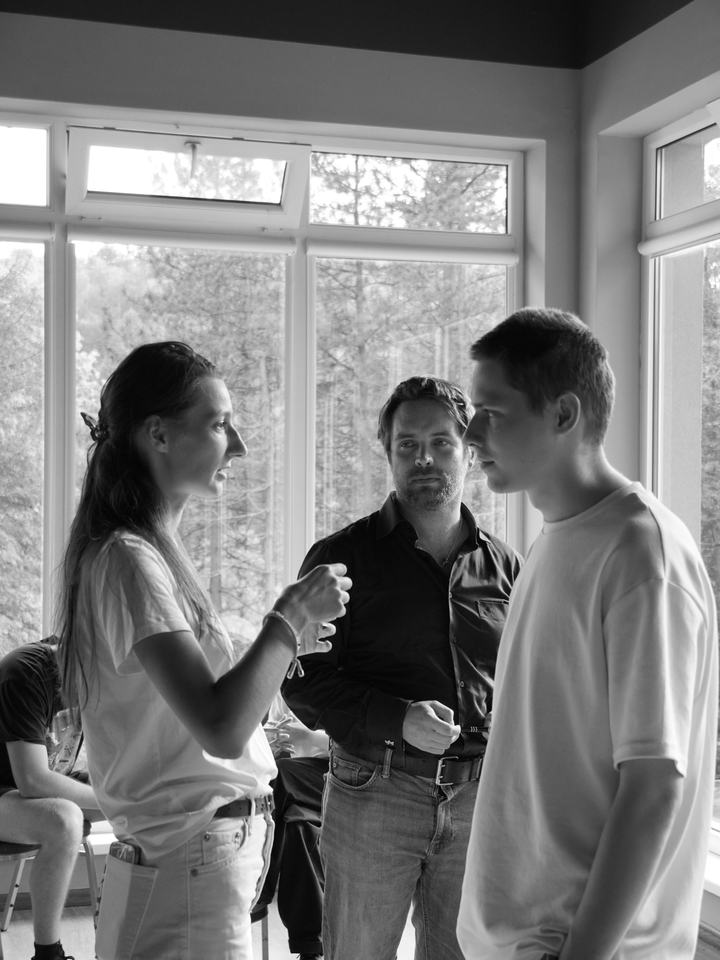
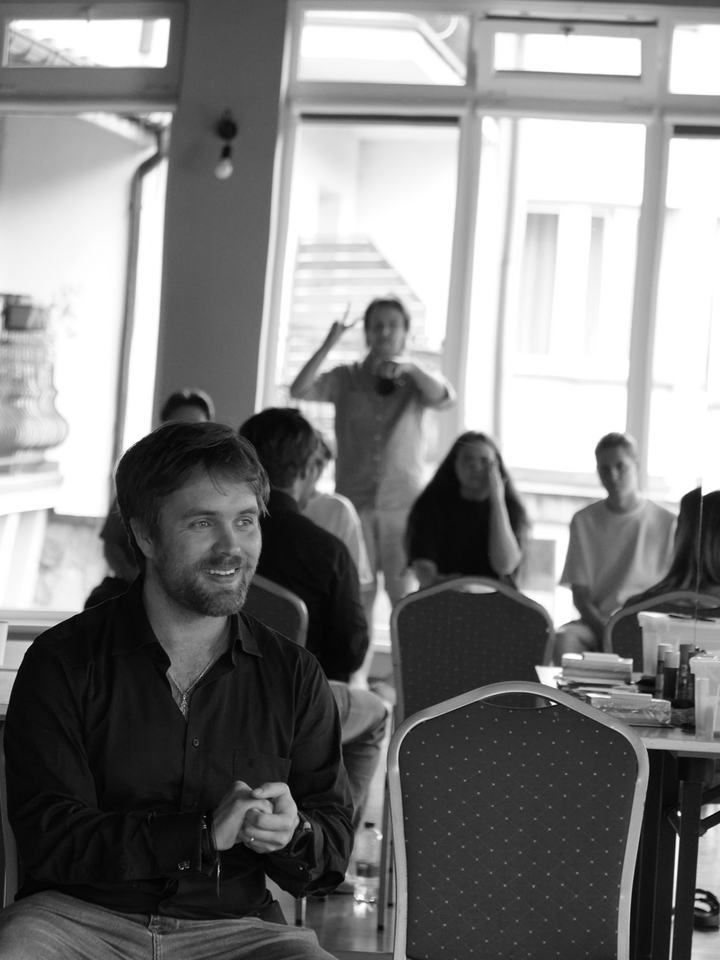
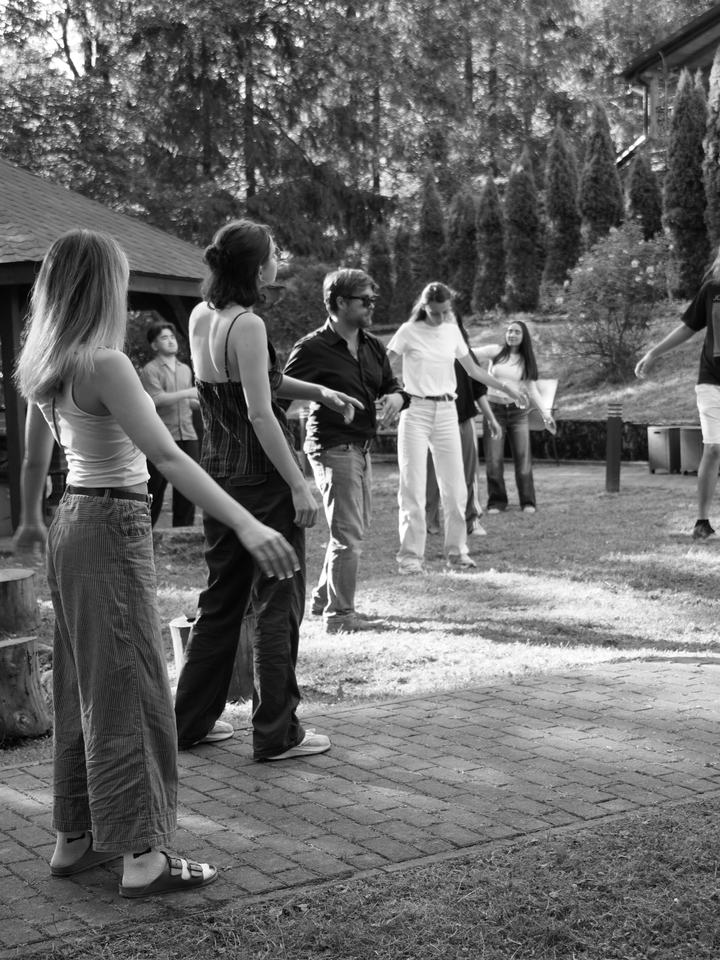
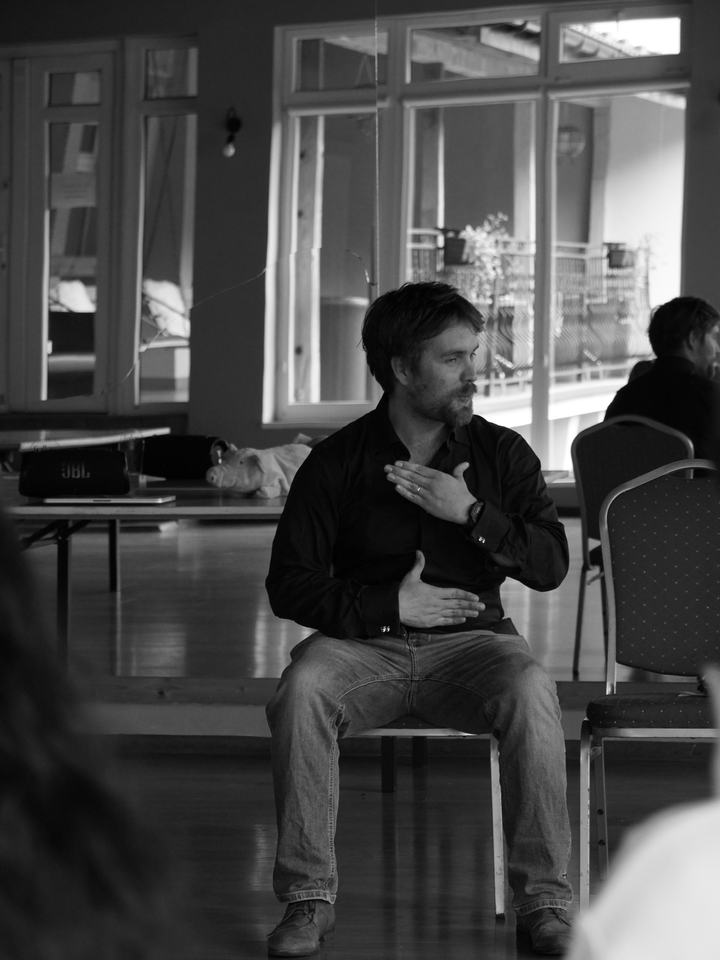
Wisła, projekt „Better Safe than Sorry” Wisła, the “Better Safe than Sorry” project
OfertaThe offer
Trening uwagi i koncentracji Attention and Focus Training
dla zespołów pracujących w rozproszeniu cyfrowym i z narzędziami AI for teams working under digital distraction and alongside AI tools
- 6 godzin6 hours
- grupa do 14 osóbgroups of up to 14
- PL / EN / RU
| BlokBlock | CzasTime | TreśćContent |
|---|---|---|
| 1. Diagnoza uwagi1. Attention diagnosis | 1 h | Ćwiczenia ujawniające, jak długo uczestnik utrzymuje jeden przedmiot uwagi i co go zrywa — punkt odniesienia na koniec dniaExercises that reveal how long a participant holds a single object of attention and what breaks it — the reference point for the end of the day |
| 2. Ciało i zacisk2. Body and tension | 1 h | Napięcie, oddech, postawa: dlaczego skupienie rozpada się w ciele, zanim rozpadnie się w głowieTension, breath, posture: why concentration collapses in the body before it collapses in the mind |
| 3. Kręgi uwagi3. Circles of attention | 1,5 h | Rdzeń metody: mały, średni i duży krąg; świadome zawężanie i rozszerzanie pola uwagi; praca w parach i na forumThe core of the method: small, medium and large circle; deliberate narrowing and widening of the field of attention; work in pairs and in front of the group |
| 4. Hałas cyfrowy i praca z AI4. Digital noise and working with AI | 1,5 h | Publiczna samotność przy bodźcach otoczenia — open space, powiadomienia, przerwania. Praca z asystentem AI jako ćwiczenie uwagi: wiedzieć, czego się chce, zanim zada się pytanie; czytać odpowiedź uważnie zamiast przyjmować ją automatycznie; wracać do własnego toku myślenia po przerwaniu przez narzędziePublic solitude under ambient stimuli — open space, notifications, interruptions. Working with an AI assistant as an attention exercise: knowing what you want before you ask; reading the answer attentively instead of accepting it automatically; returning to your own line of thought after the tool has broken it |
| 5. Przeniesienie na stanowisko5. Transfer to the desk | 1 h | Rytuał wejścia w zadanie, higiena bodźców i narzędzi cyfrowych, blok pracy głębokiej, otwarcie spotkania ćwiczeniem uwagi; indywidualny plan na 30 dniThe ritual of entering a task, hygiene of digital stimuli and tools, the deep-work block, opening a meeting with an attention exercise; an individual 30-day plan |
Co zostaje po warsztacieWhat remains after the workshop
- Indywidualny protokół uwagi na 30 dni. Karta z krótkimi ćwiczeniami do wykonania przy biurku — dziesięć minut dziennie, bez sprzętu i bez aplikacji — wraz z zasadami pracy z asystentem AI, które utrzymują uwagę i krytyczne czytanie przy narzędziu. An individual 30-day attention protocol. A card of short exercises to be done at the desk — ten minutes a day, no equipment and no app — together with rules for working with an AI assistant that keep attention and critical reading intact at the tool.
- Raport zbiorczy dla HR. Zanonimizowane zestawienie z ankiety wejściowej i wyjściowej: gdzie zespół traci uwagę, które nawyki organizacyjne i narzędzia to napędzają, rekomendacje na poziomie zespołu, nie jednostki. A summary report for HR. An anonymised comparison of the entry and exit surveys: where the team loses attention, which organisational habits and tools drive it, and recommendations at team level rather than individual level.
- (Na życzenie) Ćwiczenia grupowe do samodzielnego prowadzenia. Krótkie ćwiczenia, którymi zespół otwiera sobie spotkanie lub dzień pracy — przekazywane na prośbę klienta. (On request) Group exercises for the team to run itself. Short exercises to open a meeting or a working day — provided at the client’s request.
- (Opcja) Sesja follow-up online po 4 tygodniach — 2 h pracy na tym, co z protokołu utrzymało się, a co się rozsypało i dlaczego. (Option) An online follow-up session after 4 weeks — 2 h of work on what held from the protocol, what fell apart, and why.
| Pozycja | Cena |
|---|---|
| Dzień warsztatowy 6 h (do 14 osób, u Państwa lub w sali zewnętrznej) | 7 500 zł |
| Protokół 30 dni i materiały dla uczestników | w cenie |
| Raport zbiorczy dla HR (ankieta wejściowa i wyjściowa) | 2 500 zł |
| Sesja follow-up online 2 h (opcja) | 1 900 zł |
| Pakiet rekomendowany (dzień warsztatowy + raport HR + follow-up) | 10 900 zł |
| Item | Fee |
|---|---|
| Workshop day, 6 h (up to 14 participants, on your premises or in an external room) | € 1,750 |
| 30-day protocol and participant materials | included |
| Summary report for HR (entry and exit survey) | € 580 |
| Online follow-up session, 2 h (option) | € 450 |
| Recommended package (workshop day + HR report + follow-up) | € 2,500 |
Przy zamówieniu cyklu (3+ grupy) — indywidualna wycena pakietowa. For a series of three or more groups — individual package pricing. Invoicing in PLN is available at the National Bank of Poland rate of the invoice date. Travel and accommodation outside Poland are charged at cost.
Dlaczego myWhy us
- Trening, nie prezentacja o produktywności — uczestnik przez sześć godzin ćwiczy, a nie słucha, że warto się skupić. Training, not a talk about productivity — for six hours the participant practises rather than listens to the case for concentrating.
- Aparat pochodzi z zawodu, w którym uwaga jest warunkiem wykonania pracy — sprawdzany na scenie od stu lat, a nie w zeszłorocznym poradniku. The apparatus comes from a profession where attention is a condition of doing the work at all — tested on stage for a century, not in last year’s handbook.
Zamówienie i zapytaniaBooking and enquiries
Realizacje w całej Polsce i Unii Europejskiej. Napisz, ilu jest uczestników i jaki termin Państwa interesuje — odeślemy propozycję i pełną ofertę w PDF. Delivered across Poland and the EU. Write with the number of participants and the dates you have in mind — we will send back a proposal and the full offer as a PDF.
workshops@humanpresencelab.orgWarsztaty AI dla firmAI workshops for companies
Human in the Loop.
Kompetencje AI dla zespołów
Human in the Loop.
AI Competence for Teams
Obowiązek z art. 4 AI Act — od podstaw modeli do własnych agentów. The Article 4 AI Act obligation — from how models work to building your own agents.
Zgodność nie bierze się z polityki w szufladzie, tylko z ludzi, którzy wiedzą, czego używają. Compliance does not come from a policy in a drawer. It comes from people who know what they are using.
Dlaczego terazWhy now
Państwa zespół już używa AI. Pytanie brzmi wyłącznie, czy wiedzą Państwo, kto, do czego i na jakich danych.
Your team already uses AI. The only question is whether you know who uses it, for what, and on which data.
Pracownik wkleja do darmowego czatu umowę z klientem, CV kandydata albo wyciąg z bazy — i w tej sekundzie traci kontrolę nad tym, gdzie te dane trafią i na czym zostaną wykorzystane. Drugi przyjmuje odpowiedź modelu bez weryfikacji, bo brzmiała pewnie — a model brzmi najpewniej właśnie wtedy, gdy się myli. Trzeci buduje na własną rękę automatyzację, o której zarząd nie wie, i która przestanie działać w dniu, w którym on odejdzie. To ryzyko realizuje się co tydzień — wyciekiem, błędem w piśmie wychodzącym, decyzją opartą na konfabulacji — a nie raz na kontrolę.
One employee pastes a client contract, a candidate’s CV or a database extract into a free chatbot — and in that second loses control over where the data goes and what it will be used for. Another accepts the model’s answer without verifying it, because it sounded confident — and a model sounds most confident precisely when it is wrong. A third builds an automation of his own that management knows nothing about, and that will stop working the day he leaves. This risk materialises every week — as a leak, an error in an outgoing letter, a decision based on a confabulation — not once per inspection.
Prawo każe ten obszar uporządkować i daje na to konkretne ramy. Art. 4 AI Act nakłada na każdą organizację używającą systemów AI — także kupionych gotowych, także wbudowanych w pakiet biurowy — obowiązek wspierania kompetencji zespołu. Art. 50 dokłada obowiązki przejrzystości: poinformowanie człowieka, że rozmawia z systemem AI, i oznaczanie treści wygenerowanych. Po nowelizacji z 2026 r. jest to obowiązek starannego działania: nie trzeba gwarantować poziomu u konkretnej osoby — trzeba wykazać jakość i udokumentowanie podjętych środków.
The law requires this area to be put in order and provides a concrete framework for doing so. Article 4 of the AI Act imposes on every organisation using AI systems — including off-the-shelf products and assistants built into an office suite — an obligation to support the AI literacy of its staff. Article 50 adds transparency duties: informing a person that they are interacting with an AI system, and marking generated content. Following the 2026 Digital Omnibus amendment this is an obligation of measures, not of result: you do not have to guarantee a given level of competence in a particular person — you have to demonstrate the quality of the measures taken, and to document them.
I tu obowiązek zamienia się w aktywo. Udokumentowane szkolenie jest tarczą. W kontroli, w due diligence przed transakcją, w przetargu, w sporze pracowniczym i w postępowaniu o dyskryminację pada to samo pytanie — „jakie środki podjęliście” — i odpowiada się na nie dokumentem, nie deklaracją. Firma, która ma program, listę uczestników, zakres godzinowy i zaświadczenia imienne, odpowiada w pięć minut. Firma, która ich nie ma, tłumaczy się tygodniami.
And this is where an obligation turns into an asset. Documented training is a shield. In an inspection, in pre-transaction due diligence, in a public tender, in an employment dispute and in discrimination proceedings, the same question is asked — “what measures did you take?” — and it is answered with a document, not a declaration. A company that has a programme, an attendance list, an hourly scope and named certificates answers in five minutes. A company that has none of these spends weeks explaining itself.
Kalendarz, który już biegnieThe clock is already running
Art. 4 obowiązuje od 2 lutego 2025 r.; rozporządzenie (UE) 2026/1744, obowiązujące od 27 lipca 2026 r., przeredagowało ten przepis na obowiązek starannego działania — obowiązek nie zniknął, zmienił się sposób jego wykazywania. Art. 50 stosuje się od 2 sierpnia 2026 r. Ustawa z 3 lipca 2026 r. o systemach sztucznej inteligencji (Dz.U. poz. 1003) weszła w życie 11 sierpnia 2026 r., a od 28 października 2026 r. jest stosowana w pełni — Komisja Rozwoju i Bezpieczeństwa Sztucznej Inteligencji może prowadzić kontrole i nakładać kary. Przesunięcie obowiązków dla systemów wysokiego ryzyka na 2 grudnia 2027 r. nie dotyczy żadnego z tych terminów.
Article 4 has applied across the Union since 2 February 2025. Regulation (EU) 2026/1744 (the Digital Omnibus on AI), published in the Official Journal on 24 July 2026 and in force since 27 July 2026, rewrote that provision in full: the duty is now to take measures to support the development of AI literacy, with no specific level guaranteed for any individual — the obligation has not disappeared, what changed is how it is demonstrated. Enforcement of Article 4 lies with the national market surveillance authorities, which began supervising and enforcing on 2 August 2026 — the same date from which the transparency duties under Article 50 apply. The postponement of the high-risk obligations to 2 December 2027 and 2 August 2028 moved none of these dates.
Co obiecujemyWhat we promise
Nie sprzedajemy straszenia karą — i nie musimy. Art. 4 nie ma własnej sankcji finansowej w katalogu z art. 99. Obiecujemy dwie rzeczy twardsze od groźby:
We do not sell fear of fines — and we do not need to. Article 4 has no financial penalty of its own in the catalogue in Article 99. We promise two things harder than a threat:
- Świadomy zespół. Ludzie, którzy rozumieją, czego używają: wiedzą, dlaczego model konfabuluje i po czym to poznać, wiedzą, jakich danych nie wolno mu podać, i sprawdzają odpowiedzi, zanim się pod nią podpiszą. A team that knows what it is doing. People who understand what they are using: they know why a model confabulates and how to spot it, they know which data must never be given to it, and they check the answer before they put their name to it.
- Firmę gotową na pytanie kontrolne. Po warsztatach mają Państwo komplet dowodów — dokumentację kompetencji, inwentarz systemów AI, szkic polityki i protokół pracy z modelem — gotowy do okazania w kontroli, audycie, due diligence i przetargu. Na pytanie „jakie środki podjęliście” odpowiadają Państwo dokumentem. A company ready for the inspector’s question. After the workshop you hold a complete set of evidence — competence documentation, an inventory of AI systems, a draft policy and a working protocol for using models — ready to present in an inspection, an audit, due diligence or a tender. To the question “what measures did you take?” you answer with a document.
Jak pracujemyHow we work
Uczestnik przez cały dzień pracuje przy klawiaturze, na własnym sprzęcie i na zadaniach dobranych pod jego zespół i specyfikę firmy — nie ogląda prezentacji o rewolucji. Na sali są dwa modele: komercyjny model globalny (Claude) i polski model publiczny z rodziny PLLuM rozwijanej przez NASK w konsorcjum HIVE AI. Różnicę w polszczyźnie urzędowej, koszcie, kontroli nad danymi i podatności na halucynacje uczestnik widzi na własnym zadaniu, zamiast słuchać o niej. Każdy blok kończy się czymś, co zostaje w firmie: promptem, procedurą, wpisem do inwentarza systemów AI albo pozycją na liście procesów do automatyzacji.
Participants spend the whole day at the keyboard, on their own equipment and on tasks selected for their team and for the specifics of the company — not watching a presentation about a revolution. Two models are in the room: a global commercial model (Claude) and a second model that is open, hosted in the EU and trained on the language of your country. The difference in official-register language, cost, control over data and susceptibility to hallucination is something participants see on their own task instead of hearing about it. Every block ends with something that stays in the company: a prompt, a procedure, an entry in the AI systems inventory, or an item on the list of processes to automate.
| BlokBlock | CzasTime | TreśćContent |
|---|---|---|
| 1. Czym jest model1. What a model is | 1 h | Sieć neuronowa bez matematyki: uczenie na danych, tokeny, przewidywanie następnego słowa, okno kontekstu. Dlaczego model konfabuluje i dlaczego brzmi najpewniej wtedy, gdy się myli. Czym różni się model od aplikacji, w której go widzicieNeural networks without the mathematics: training on data, tokens, next-word prediction, the context window. Why a model confabulates and why it sounds most convincing when it is wrong. How a model differs from the application you see it in |
| 2. Ramy prawne i etyka AI2. The legal framework and AI ethics | 0,5 h | AI Act bez żargonu: role dostawcy i podmiotu stosującego, poziomy ryzyka, art. 4 i art. 50, terminy do 2027 r., krajowy organ nadzoru. Co wolno, a czego nie wolno wprowadzić do modelu: dane osobowe, tajemnica przedsiębiorstwa, materiały klienta. Etyka AI w codziennej pracy: uprzedzenia modelu i ryzyko dyskryminacji przy rekrutacji i ocenie, granica nadzoru nad zespołem, uczciwość wobec klienta — kiedy trzeba powiedzieć, że treść powstała z modelem, i kto odpowiada za to, co człowiek podpisałThe AI Act without jargon: the provider and deployer roles, risk levels, Articles 4 and 50, the deadlines up to 2027 and 2028, the role of your national market surveillance authority. What may and may not be entered into a model: personal data, trade secrets, client materials. AI ethics in everyday work: model bias and discrimination risk in recruitment and appraisal, the limits of monitoring your own team, fairness towards the client — when you have to say that content was produced with a model, and who is answerable for what a human signed |
| 3. Promptowanie i zarządzanie kontekstem3. Prompting and context management | 1,5 h | Budowa promptu: cel, kontekst, rola, format, przykłady, kryteria odrzucenia. Zarządzanie kontekstem: co wchodzi do okna i w jakiej kolejności, po co dzielić pracę na wątki, kiedy zacząć rozmowę od nowa i dlaczego długa rozmowa psuje odpowiedzi. Sedno bloku: promptowanie tak, by ograniczyć halucynacje — praca na materiale dostarczonym zamiast na pamięci modelu, żądanie cytatu i wskazania źródła, wymuszanie odpowiedzi „nie wiem”, pytania kontrolne, rozbijanie zadania na kroki. Iteracja zamiast jednego strzału. Weryfikacja odpowiedzi — jak sprawdzić, zanim się podpisze. Ćwiczenia dobierane pod zespół i specyfikę firmyBuilding a prompt: goal, context, role, format, examples, rejection criteria. Context management: what enters the window and in what order, why work should be split into separate threads, when to start a conversation afresh and why a long conversation degrades answers. The core of the block: prompting so as to limit hallucination — working on supplied material rather than on the model’s memory, demanding quotations and sources, forcing an “I don’t know” answer, control questions, breaking a task into steps. Iteration instead of a single shot. Verifying answers — how to check before you sign. Exercises selected for the team and the specifics of the company |
| 4. Przegląd narzędzi rynkowych — i dwa modele na sali4. A review of the tools on the market — and two models in the room | 1 h | Co jest dziś na rynku i do czego: czaty ogólnego przeznaczenia, asystenci wbudowani w pakiet biurowy, narzędzia do transkrypcji, wyszukiwania i pracy z dokumentami, generatory obrazu i wideo — koszt, lokalizacja danych, dostępność przez API. Na tym tle to samo zadanie na modelu globalnym (Claude) i na modelu polskim (PLLuM): pismo urzędowe, streszczenie, analiza. Gdzie kończy się przewaga polszczyzny, a zaczyna przewaga rozumowania — kiedy który model wybraćWhat is on the market today and what for: general-purpose chatbots, assistants built into office suites, tools for transcription, search and document work, image and video generators — cost, data location, API availability. Against that background, the same task on a global model (Claude) and on an open model hosted in the EU and trained on your own language: an official letter, a summary, an analysis. Where the advantage in your own language ends and the advantage in reasoning begins — when to choose which model |
| 5. Burza mózgów i pisanie5. Thinking and writing | 1 h | Model jako partner do myślenia, nie generator gotowców: rozbijanie problemu, generowanie wariantów, krytyka własnego pomysłu cudzymi argumentami. Pisanie: głos firmy, redakcja, skracanie. Gdzie AI psuje tekst i po czym poznać tekst pisany bezmyślnieThe model is a partner for thinking, not a generator of ready-made text: breaking a problem apart, generating variants, criticising your own idea with someone else’s arguments. Writing: the company’s voice, editing, cutting. Where AI spoils a text, and how to recognise text written thoughtlessly |
| 6. Higiena cyfrowa w pracy z AI6. Digital hygiene in work with AI | 0,5 h | Zdrowe nawyki, które zostają po warsztacie: kiedy sięgnąć po model, a kiedy to strata czasu; jak nie oddać modelowi myślenia i nie stracić własnej wprawy w pisaniu i liczeniu; uwaga i zmęczenie przy pracy z asystentem — praca blokami zamiast ciągłego przełączania. Higiena danych: co zostaje w historii czatu, jak ją czyścić, gdzie wyłączyć uczenie na naszych treściach, konto firmowe zamiast prywatnego. Zasada, którą uczestnik wynosi na piśmie: podpisuję się tylko pod tym, co przeczytałem i sprawdziłemHealthy habits that outlast the workshop: when to reach for a model and when it is a waste of time; how not to hand your thinking over to the model and not to lose your own fluency in writing and arithmetic; attention and fatigue when working with an assistant — working in blocks instead of constant switching. Data hygiene: what stays in the chat history, how to clear it, where to switch off training on your content, a company account instead of a private one. The rule each participant takes away in writing: I sign only what I have read and checked |
| 7. Podłączanie aplikacji7. Connecting applications | 0,5 h | Model połączony z pocztą, dyskiem, kalendarzem i bazą wiedzy firmy. Czym jest RAG i dlaczego rozwiązuje więcej problemów niż dostrajanie modelu. Uprawnienia i ryzyka: model widzi dokładnie tyle, ile mu damyA model connected to mail, drive, calendar and the company knowledge base. What RAG is and why it solves more problems than fine-tuning. Permissions and risks: a model sees exactly as much as we give it |
| BlokBlock | CzasTime | TreśćContent |
|---|---|---|
| 8. Wstęp do agentów8. Introduction to agents | 2 h | Czym agent różni się od czatu: cel, narzędzia, pętla działania, uprawnienia, punkt zatrzymania. Budowa prostego agenta na procesie uczestników — obsługa skrzynki, przetwarzanie dokumentów, przygotowanie odpowiedzi. Gdzie agent jest złym pomysłem i dlaczego automatyzacja bałaganu daje szybszy bałaganHow an agent differs from a chatbot: goal, tools, action loop, permissions, stopping point. Building a simple agent on the participants’ own process — handling an inbox, processing documents, preparing replies. Where an agent is a bad idea, and why automating a mess produces a faster mess |
| 9. Modele zamknięte i otwarte9. Closed and open models | 1 h | API dostawcy kontra model na własnej infrastrukturze: koszt, kontrola danych, ciągłość, zgodność. Co realnie daje model otwarty i czego od niego nie oczekiwać. Przegląd dostępnych rodzin modeli, w tym polskichA vendor API versus a model on your own infrastructure: cost, control over data, continuity, compliance. What an open model really gives you and what not to expect from it. A review of the available model families, including those trained on your own language |
| 10. Fine-tuning i alternatywy10. Fine-tuning and the alternatives | 1 h | Kiedy fine-tuning ma sens, a kiedy wystarczy dobry prompt i baza wiedzy. Jakich danych wymaga, ile kosztuje, co psuje. Decyzja: prompt, RAG czy fine-tuning — na konkretnym zadaniu firmyWhen fine-tuning makes sense and when a good prompt plus a knowledge base is enough. What data it requires, what it costs, what it breaks. The decision: prompt, RAG or fine-tuning — on a concrete task of the company |
| 11. AI Governance w praktyce11. AI governance in practice | 1,5 h | Inwentarz systemów AI, w tym narzędzi używanych przez zespół bez wiedzy zarządu. Kwalifikacja ról i ryzyka, nadzór człowieka nad decyzją, polityka korzystania z AI, klauzule AI w umowach z dostawcami, dokumentowanie kompetencji. Kto w firmie za co odpowiada — imiennieAn inventory of AI systems, including tools used by the team without management’s knowledge. Classification of roles and risk, human oversight of decisions, an AI usage policy, AI clauses in contracts with suppliers, documenting competence. Who in the company is responsible for what — by name |
| 12. Mapa wdrożeń12. Deployment map | 0,5 h | Procesy firmy uszeregowane według zwrotu i ryzyka: co automatyzować najpierw, czego nie automatyzować wcale, co wymaga człowieka w pętliThe company’s processes ranked by return and risk: what to automate first, what not to automate at all, what requires a human in the loop |
Co zostaje po warsztatachWhat you keep after the workshop
- Dokumentacja kompetencji do art. 4. Program, zakres godzinowy, lista uczestników, data, zaświadczenia imienne — komplet gotowy do wpięcia w dokumentację zgodności i do okazania przy kontroli, audycie lub w przetargu. Competence documentation for Article 4. Programme, hourly scope, attendance list, date, named certificates — a complete set ready to be filed with your compliance documentation and produced during an inspection, an audit or a tender.
- Protokół pracy z modelem. Zestaw promptów i zasad dopasowany do stanowisk w zespole, wraz z listą danych, których do modelu nie wprowadzamy, i zasadami higieny cyfrowej przyjętymi na sali. A working protocol for using models. A set of prompts and rules matched to the roles in your team, together with a list of data we do not enter into a model, and the digital-hygiene rules agreed in the room.
- Szkic polityki korzystania z AI. Jedna do dwóch stron wypracowanych na sali — do przyjęcia zarządzeniem po weryfikacji przez Państwa prawnika. A draft AI usage policy. One to two pages worked out in the room — to be adopted by management resolution after review by your lawyer.
- Inwentarz systemów AI i mapa procesów do automatyzacji z oceną ryzyka według kategorii AI Act — punkt wyjścia do audytu albo do wdrożenia. An inventory of AI systems and a map of processes for automation, with a risk assessment by AI Act category — the starting point for an audit or for deployment.
- (Opcja) Sesja follow-up online po 4 tygodniach — 2 h pracy na tym, co z protokołu utrzymało się w codziennej pracy, a co się rozsypało i dlaczego. (Option) An online follow-up session after 4 weeks — 2 hours of work on what from the protocol survived in daily practice, what fell apart, and why.
CennikPricing
| Pozycja | Cena |
|---|---|
| Dzień 1 — fundamenty i praktyka, 6 h (do 14 osób, u Państwa) | 10 900 zł |
| Dzień 2 — agenci, modele i governance, 6 h (ta sama grupa)Dokumentacja kompetencji, zaświadczenia i materiały dla uczestników w cenie | 9 900 zł |
| Szkolenie online — sama teoria, 4 h (do 14 osób)Wykład z pokazem na żywo, bez pracy przy klawiaturze uczestnika. Dokumentacja kompetencji do art. 4 i zaświadczenia imienne w cenie | 8 000 zł |
| Sesja follow-up online 2 h (opcja) | 1 900 zł |
| Pakiet dwudniowy (dzień 1 + dzień 2 + follow-up)Oszczędność 3 200 zł w stosunku do pozycji kupowanych osobno | 19 500 zł |
| Item | Price |
|---|---|
| Day 1 — foundations and practice, 6 h (up to 14 people, at your premises) | EUR 3,900 |
| Day 2 — agents, models and governance, 6 h (same group)Competence documentation, certificates and participant materials included | EUR 3,500 |
| Online training — theory only, 4 h (up to 14 people)A lecture with a live demonstration, without participants working at the keyboard. Article 4 competence documentation and named certificates included | EUR 2,600 |
| Online follow-up session, 2 h (option) | EUR 700 |
| Two-day package (day 1 + day 2 + follow-up)A saving of EUR 1,200 against the items bought separately | EUR 6,900 |
Ceny obejmują warsztat w siedzibie Państwa firmy. Wynajem sali zewnętrznej rozliczany jest dodatkowo — według faktycznego kosztu obiektu, po uzgodnieniu miejsca. Przy zamówieniu cyklu (3+ grupy) — indywidualna wycena pakietowa. Dojazd i nocleg poza województwem śląskim rozliczane osobno. Warsztaty prowadzone po polsku, angielsku lub rosyjsku. All prices are in euro, net of VAT, and cover a workshop held at your company’s premises. Hire of an external venue is billed separately, at the actual cost of the facility, once the location is agreed. For on-site workshops, travel and accommodation are billed separately, at actual cost. For a series of groups (3+) — individual package pricing. Workshops are delivered in English, Russian or Polish.
Usługi dodatkowe — poza warsztatamiAdditional services — beyond the workshops
| ZakresScope | CenaPrice |
|---|---|
| Audyt AI Governance i zgodności z AI Act. Inwentarz wszystkich systemów AI w organizacji, kwalifikacja ról (dostawca / podmiot stosujący), klasyfikacja ryzyka, ocena obowiązków przejrzystości z art. 50, przegląd umów z dostawcami pod kątem klauzul AI, luki w dokumentacji. Raport zamyka lista działań z terminami, kosztem i wskazaniem osoby odpowiedzialnej — wskazania wdrożeniowe, nie sama diagnoza. Realizacja 2–3 tygodnieAI governance and AI Act compliance audit. An inventory of all AI systems in the organisation, classification of roles (provider / deployer), risk classification, assessment of the transparency duties under Article 50, a review of supplier contracts for AI clauses, gaps in documentation. The report closes with a list of actions with deadlines, costs and a named person responsible — implementation guidance, not diagnosis alone. Delivery in 2–3 weeks | od 14 000 złfrom EUR 5,500 |
| Agent AI na zamówienie — jeden proces. Budowa i wdrożenie agenta na wybranym procesie z mapy powstałej na warsztatach: obsługa skrzynki i przygotowanie odpowiedzi, przetwarzanie dokumentów i faktur, streszczanie i klasyfikacja, raportowanie cykliczne. Wycena po mapowaniu procesuA custom AI agent — one process. Building and deploying an agent for a process selected from the map produced during the workshop: inbox handling and drafting replies, processing documents and invoices, summarising and classification, recurring reporting. Priced after the process has been mapped | od 12 000 złfrom EUR 4,800 |
| Agent zintegrowany z systemami firmy. Agent działający na CRM, ERP, poczcie i bazie wiedzy, z panelem kontroli i logiem decyzjiAn agent integrated with the company’s systems. An agent working on the CRM, ERP, mail and knowledge base, with a control panel and a decision log | 20 000 – 45 000 złEUR 8,000 – 18,000 |
Dla organizacji, które przeprowadziły u siebie warsztaty — 15% rabatu na audyt i wdrożenia agentów, ważne 6 miesięcy od ostatniego dnia szkoleniowego. Koszty modeli (API), hostingu i opieki powdrożeniowej rozliczane osobno i rejestrowane na Państwa kontach, nie na naszych. Organisations that have held the workshops on their premises receive a 15% discount on the audit and on agent deployments, valid for 6 months from the last training day. Model (API), hosting and post-deployment support costs are billed separately and registered on your accounts, not ours.
Dlaczego myWhy us
- Trening przy klawiaturze na zadaniach dobranych pod Państwa zespół — po sześciu godzinach uczestnik ma działające nawyki, a nie notatki z prelekcji o rewolucji AI. Training at the keyboard, on tasks selected for your team — after six hours a participant has working habits, not notes from a talk about the AI revolution.
- Dwa modele na sali, w tym polski model publiczny. Nie jesteśmy dostawcą oprogramowania, więc szkolenie nie jest dodatkiem do licencji, którą mielibyśmy Państwu sprzedać. Two models in the room, one of them open and hosted in the EU. We are not a software vendor, so the training is not an add-on to a licence we would be selling you.
- Kompetencje i zgodność jednym budżetem. To samo szkolenie, które podnosi kompetencje zespołu, zostawia dowód ich podnoszenia. Competence and compliance from one budget. The same training that raises your team’s competence leaves behind the proof that it was raised.
- Doświadczenie z sali, nie z webinaru — przed grupami o bardzo różnym poziomie wyjściowym, od pierwszego kontaktu z modelem po zaawansowanych użytkowników. Experience from the room, not from a webinar — in front of groups at very different starting levels, from first contact with a model to advanced users.
O prowadzącymAbout the trainer
Bartłomiej Malik — trener szkoleń z cyfryzacji i sztucznej inteligencji w projekcie finansowanym z KPO: 78 szkoleń i 464 godziny zajęć przeprowadzone w urzędach w 2026 r., przed grupami o skrajnie różnym poziomie wyjściowym. To nie jest portfolio webinarowe — to sala, pytania z sali i sprzęt uczestnika.
Bartłomiej Malik — trainer in digitalisation and artificial intelligence on a programme funded under the EU Recovery and Resilience Facility: 78 training sessions and 464 hours of classes delivered in public administration offices in 2026, in front of groups at extremely different starting levels. This is not a webinar portfolio — it is the room, the questions from the room, and the participant’s own equipment.
Certyfikat specjalizacji „AI Foundations for Business Professionals” — Saïd Business School, University of Oxford: AI Essentials, Generative and Agentic AI oraz AI Governance (2026). Licencjat — Uniwersytet Warszawski, Wydział „Artes Liberales”; studia z fizyki i matematyki w ramach MISMaP UW — stąd bierze się sposób prowadzenia zajęć: uczestnik dostaje wyjaśnienie, czym te modele są i dlaczego w ogóle działają, a nie listę przycisków do klikania. Staż w Instytucie Sobieskiego w zakresie polityk publicznych (2013). Tytuł magistra — The Boris Shchukin Theatre Institute; stypendysta programu „Młoda Polska” Ministerstwa Kultury i Dziedzictwa Narodowego (2021). Przygotowanie aktorskie nie jest ciekawostką w biogramie, tylko narzędziem pracy Państwa zespołu: to pięć lat szkoły, w której zawodem jest utrzymanie uwagi sali. W praktyce oznacza to dwanaście godzin warsztatu prowadzonych z pełną energią i uwagą uczestników do ostatniego bloku — z reakcją na to, co dzieje się na sali, a nie z odczytania slajdów. Prezes zarządu Human Presence Lab Foundation.
Specialisation certificate “AI Foundations for Business Professionals” — Saïd Business School, University of Oxford: AI Essentials, Generative and Agentic AI, and AI Governance (2026). BA — University of Warsaw, Faculty of “Artes Liberales”; studies in physics and mathematics at MISMaP UW — which is where the teaching method comes from: the participant is given an explanation of what these models are and why they work at all, not a list of buttons to click. Internship at the Sobieski Institute in public policy (2013). MA — The Boris Shchukin Theatre Institute; holder of the “Młoda Polska” scholarship of the Polish Ministry of Culture and National Heritage (2021). The acting background is not a curiosity in a biography but a tool that works for your team: it is five years of a school whose entire profession is holding the attention of a room. In practice that means twelve hours of workshop delivered with full energy and with participants’ attention held to the last block — responding to what is happening in the room, rather than reading out slides. President of the Management Board of the Human Presence Lab Foundation.
Jak zacząć — 15 minut przez telefon How to start — 15 minutes on the phone
Jedna krótka rozmowa, bez prezentacji i bez zobowiązania. Ustalamy, kto w Państwa organizacji już używa AI i do czego, gdzie to dziś tworzy ryzyko i które procesy realnie nadają się do automatyzacji w tym kwartale. Wychodzą z niej Państwo z diagnozą potrzeb zespołu i jasną informacją, czego Państwu trzeba — warsztatu, audytu, czy na razie niczego. One short conversation, with no presentation and no commitment. We establish who in your organisation already uses AI and for what, where that creates risk today, and which processes are genuinely suitable for automation this quarter. You come away with a diagnosis of your team’s needs and a clear answer on what you need — a workshop, an audit, or nothing for now.
Napiszą Państwo jedno zdanie — odezwiemy się z propozycją terminu. Write one sentence and we will come back to you with a proposed date.
workshops@humanpresencelab.orgRealizacjeDelivery
W całej Polsce i Unii Europejskiej. Warsztaty prowadzimy po polsku, angielsku i rosyjsku. Throughout Poland and the European Union. Workshops are delivered in Polish, English and Russian.
Stan prawny na 13 września 2026 r.: rozporządzenie (UE) 2024/1689 (AI Act) w brzmieniu nadanym rozporządzeniem (UE) 2026/1744; ustawa z dnia 3 lipca 2026 r. o systemach sztucznej inteligencji (Dz.U. 2026 poz. 1003). Warsztaty i audyt nie stanowią porady prawnej — kwalifikacja prawna systemów i treść wewnętrznych aktów wymagają zatwierdzenia przez Państwa obsługę prawną. Legal position as at 14 September 2026: Regulation (EU) 2024/1689 (AI Act) as amended by Regulation (EU) 2026/1744 (Digital Omnibus on AI), together with the implementing legislation and the designated market surveillance authority of your Member State. The workshops and the audit do not constitute legal advice — the legal classification of systems and the content of internal acts require approval by your legal counsel.
KontaktContact
Fundacja Human Presence Lab Human Presence Lab Foundation
Dane rejestroweRegistration data
- KRS
- 0001263846
- NIP
- 9542914480
- REGON
- 545613309
- SiedzibaSeat
- ul. Mariacka 37/6
40-014 Katowice
PolandPolska
Władze fundacjiGoverning bodies
Bartłomiej Malik Prezes Zarządu Fundacji President of the Management Board
Maciej Malik Prezes Rady Fundacji President of the Foundation Council